What is an Employer Value Proposition (EVP)?
The Employer Value Proposition (EVP), often also referred to as the employer promise, describes what an organization stands for as an employer: namely, what employees can expect and what the organization credibly offers in return. Your EVP captures precisely this: what differentiates you from others, and why someone should choose to work for your organization. An EVP is shaped by the combination of values, culture, benefits, development opportunities, work-life offerings, and all factors that make an organization attractive as an employer. A strong EVP goes beyond an HR text or an employer branding claim. It forms the strategic foundation for how recruiting, communication, and leadership can be effective. Without this clarity, many initiatives are well intentioned, but ultimately ineffective.
Why is a strong Employer Value Proposition worth it?
A clear and compelling EVP brings several advantages:
- It grabs the attention of talent – and wins them over.
- It speaks to the people who are the right fit for your organization – across industries.
- It motivates your existing team and strengthens engagement.
- It gives your employer branding clear direction.
- It helps you prioritize your HR strategy more effectively.
Without a clear EVP, many measures fall short
Many companies invest a lot of time and money in job advertisements, career pages, and employer branding campaigns. What is often underestimated is that without a clear EVP, these measures lack a common basis. The EVP defines who a company wants to appeal to, what it can credibly promise, and what it stands for as an employer. Without this clarity, campaigns merely reinforce vagueness instead of having an impact. A strong EVP is therefore not an additional building block, but a prerequisite for recruiting and employer branding measures to be effective in the first place.
What makes a good EVP?
Imagine you were looking for a job yourself. What would a company need to offer for you to say “yes”? The answer lies between what you already provide today and what you aspire to offer in the future. That balance defines your EVP.
Important: Your EVP can express a vision, but it must remain honest. Don’t promise what you can’t deliver. If you can distill your values and strengths into a memorable, meaningful message, you'll create identification. But that promise must align with reality – otherwise, it loses credibility.
An EVP is not a wish list
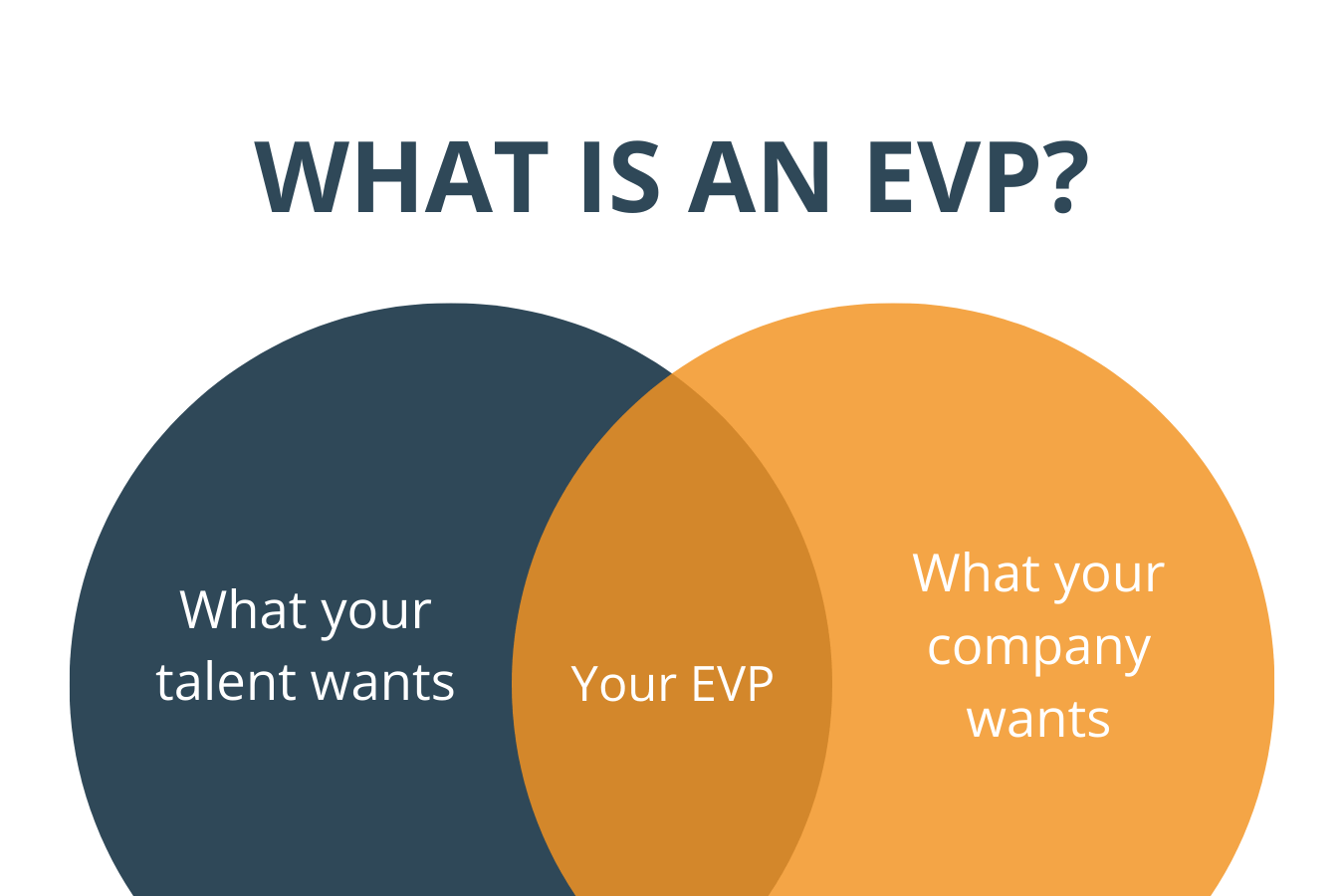
An EVP is not based on trends or idealised images. Nor is it a hodgepodge of everything talented individuals could possibly want. A credible EVP lies at the intersection between:
- what employees actually expect and what a company can realistically and consistently deliver today
- Anything beyond that may be well-intentioned, but it undermines trust in the long term.
How to develop a compelling EVP
The best starting point for an EVP is not the workshop room, but everyday working life. Employees know best what really makes a company stand out as an employer. A key question here is: Why do you enjoy working here and why do you stay? The answers to this question are often more honest, concrete and valuable than any formulated vision. They reveal not only strengths, but also clear limitations, and it is precisely this clarity that makes an EVP credible.
- Define your target audience
Get clear on who you want to reach. What matters to them? Flexibility, career growth, purpose, an international environment? Define their needs – and identify which of your strengths match them. - Ask your employees
Your team knows best what makes your company unique. Ask what they value – and what could be improved. This reveals how your organization is truly perceived from the inside. Tip: test different EVP approaches with your target group. - Stay honest
It sounds simple, but it’s crucial: only promise what you can genuinely offer – now or in the near future. Authenticity beats hype. Candidates will sense whether your promise holds up. - Make it visible
Your Employer Value Proposition belongs in every job posting, on your career page, in your employer branding, in onboarding – and in every personal conversation. Make your values something people can feel, not just read.
How do you measure EVP success?
Your EVP is effective when it delivers results – both internally and externally. Key indicators include:
- Increased quality and conversion rate of applications
- Employees referencing EVP themes during onboarding or exit interviews
- Positive mentions on platforms like Kununu or Glassdoor
- Growing rate of employee referrals
- Stronger identification and reduced turnover
Tip: Regularly gather feedback – through employee surveys, employer brand checks or focus groups.
Conclusion: Your Employer Value Proposition is your strongest recruiting tool
A strong EVP helps you stand out as a credible and attractive employer. It’s not a slogan – it’s a real promise. When you build your EVP with intention, communicate it honestly, and live it consistently, it becomes a powerful magnet for the right talent.
Important: an EVP is not a static document. It must be regularly reviewed and further developed in line with feedback, day-to-day work realities, and organizational changes. Organizations evolve. Teams grow. Expectations shift. An effective EVP evolves alongside the organization, or it loses relevance.
Want to get started straight away? Our EVP guide gives you the tools to do it:
Want to sharpen your EVP or take your employer brand to the next level? Reach out to us – we’ll support you with expertise, experience and real-world insights.