What if the next health issue in your company is currently being recruited? It doesn’t arise during onboarding. Nor during the probationary period. It starts with a document that most organisations never really take seriously: the job description.
Corporate health initiatives start too late
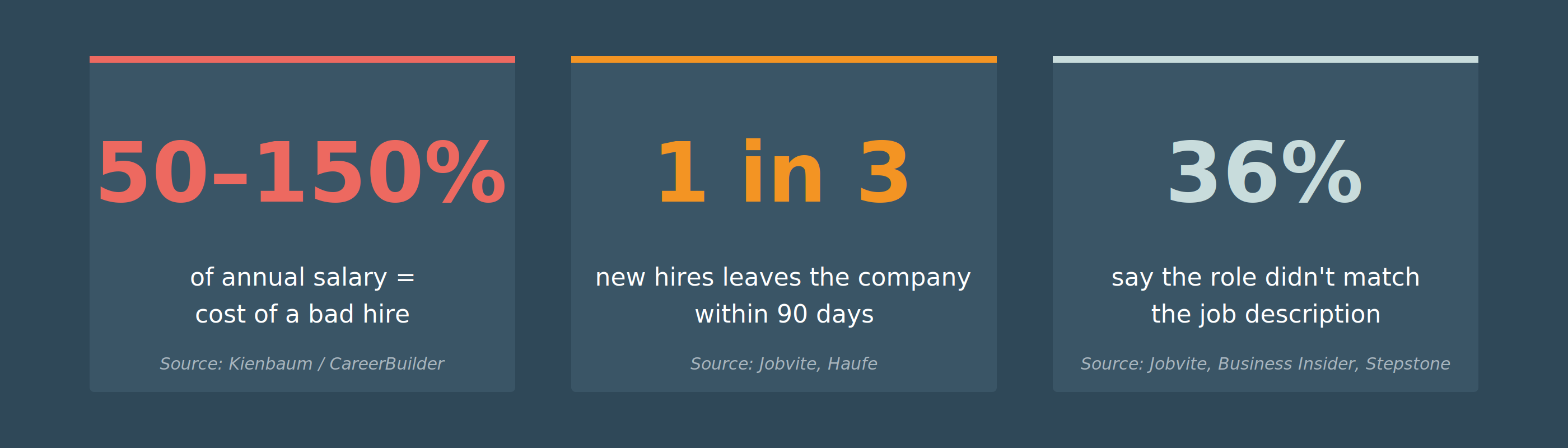
Resilience workshops, workplace health programmes, reintegration measures – all important, all the right approach. But all these measures kick in after the problem has already arisen. Studies show that a bad hire costs between 50 and 150 per cent of the annual salary. Around 36 per cent of employees say the position did not match what they had expected. This is not purely an HR problem. It is a health problem disguised as an HR problem – and one whose origins lie long before the first day at work.
What a job description really does
A job description does not simply describe a position. It sends a signal to the market. This signal determines who feels drawn to the position – and who does not. A single document thus determines who applies at all, who joins the team and who stays. The question is: Is this signal sent deliberately? Or does your job advertisement stem from an old template that ‘somehow’ worked for the last recruitment?
‘The job description is one of the most underestimated health documents in an organisation.’
Written once. Never changed.
In most organisations, strategies, budgets and processes are reviewed regularly. The document that determines who works in your company is not. It is written once – and reused for years. Yet the position changes. The team changes. The market changes. And that is precisely where the gap arises: between what you communicate and what the position really is. In the end, it is the employees who pay the price for this gap: through frustration, feeling overwhelmed, or leaving prematurely.
The silent chain reaction
If the job description is wrong, it triggers a chain reaction that nobody directly traces back to.
- Mismatch: The wrong signal attracts the wrong applicants. The right ones don’t apply in the first place.
- Overload: Recruiters are inundated with unsuitable applications or only realise the discrepancy during the interview.
- Collateral damage: Eventually, someone is hired anyway. Someone joins the team who never quite fits in. The team compensates – quietly, every day. More friction, less trust.
This isn’t a productivity problem. It’s a health problem.
Who are you writing this job description for?
This is the crucial question. Do you have a specific person in mind as you write? Not just a list of requirements, but a real picture: what drives this person? What appeals to them? In marketing, this is the basis of every campaign. In job adverts, it’s the exception. Yet language always has an effect – whether intended or not. Some people respond to creative freedom and meaning. Others to results and pace. Still others to security and structure. This isn’t gut feeling, but neuropsychology: the ‘Motivational Compass’ according to Dirk W. Eilert. Your job description already appeals to one of these groups. The only question is: the right one? In job adverts, this is the exception.
What Agentic AI really means in recruitment
Not automation. Learning.
That is the difference that counts. An Agentic Writing System does not simply write faster what was previously done manually (learn more in our foundational article on AI). It links the language of the job description with what happens afterwards: Who applied? Who proved to be a good fit in the interview? Who is still there after 90 days?
From these signals – from recruiters, from the application process, from the hiring outcomes – the system develops a clearer picture with every cycle of what ‘good fit’ really means for this position in this company. That knowledge stays in the system. Not in the head of a person who will eventually leave.
At Refline, that’s exactly what we’re working on.
Conclusion
Fit is not a measure of recruitment efficiency. Fit is prevention. For teams that don’t have to compensate on a daily basis. For candidates who get an honest picture of the position. And for organisations that tackle health issues where they really begin: with the first signal they send to the market.
Takeaway: Workplace wellbeing doesn’t start with onboarding. It starts with the document that decides who gets hired.
With Refline, you bring structure and clarity to your recruitment process – and soon, AI-powered learning directly into your job descriptions. Please feel free to contact us if you would like to learn more.
Do you not yet have an e-recruiting solution? With Refline, you can bring structure to your entire recruiting process within just a few minutes.